
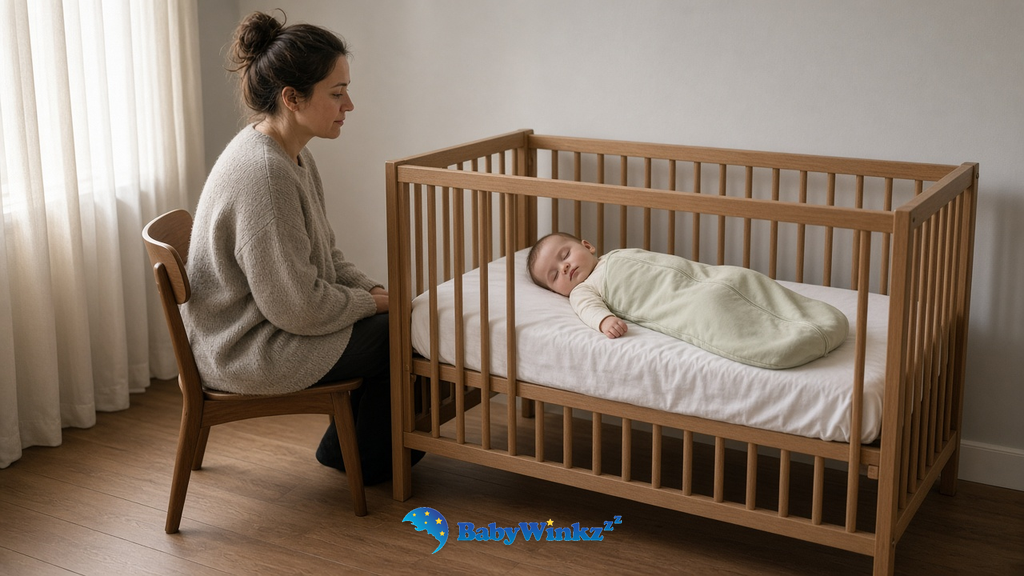
As a sleep consultant who has supported many families through this stage, I know how frustrating it can feel when your baby only naps for 30 minutes, just as you sit down with a cup of tea. A question I get asked is: “Why does my baby only nap for 30 minutes?”
These are completely normal concerns. In the early months especially, short naps, sometimes called catnaps, are very common. They do not mean you are doing something wrong, and they often improve as your baby learns to link their sleep cycles.
Why are my baby’s naps so short?
A baby’s sleep is made up of cycles, just as ours is. In infancy, one cycle is often around 30 to 45 minutes. At the end of a cycle, your baby moves into a lighter stage of sleep, or has a brief awakening. If they can resettle, the nap lasts longer. If they cannot, it can look as though they have suddenly “clicked awake”.
Age matters too. In the first few months, short and irregular naps are often simply how baby sleep looks. As babies grow, many become more able to link cycles. Around the four-month sleep regression, sleep also becomes more organised, which can temporarily make day sleep feel more broken before it evens out.
I have written before about why some babies refuse to nap at all. Short naps are a little different. Here, your baby may fall asleep reasonably well, but wake again much sooner than you hoped.
What can make short naps more likely?
Overtiredness is a common reason. When a baby has been awake a little too long, their body can produce more cortisol, a hormone involved in alertness, which can make it harder to stay asleep at the end of a cycle. I have written more about how to spot an overtired baby and about the impact of cortisol on your baby’s sleep.
The opposite can also be true. If a baby has not been awake long enough, they may not have built up enough sleep pressure to last more than one cycle, and may wake after 30 minutes ready to play.
The sleep environment matters as well. A room that is too bright, too noisy or too warm can make light sleep more fragile. A dark, comfortably cool room and a calm wind-down help your baby’s brain recognise that this is a time for rest.
Sleep associations can play a part too. If your baby usually falls asleep in your arms, while feeding, or with a dummy, they may need the same conditions again when they stir at the end of a cycle. There is nothing wrong with comfort, but it can explain why a nap ends after one cycle once they are in the cot.
Developmental leaps, teething, a new skill such as rolling, or a slightly off day can all make naps shorter for a stretch. This is usually temporary.
How can I gently help my baby’s naps last a little longer?
The reassuring news is that many families see naps lengthen with a few gentle, consistent changes. This does not need to be perfect.
- Look at how long your baby has been awake before the nap. If they seem wired, cranky or suddenly very lively, they may be overtired. If they seem bright and playful, they may need a little longer awake. Offer the nap as they are becoming sleepy, rather than once they are past it.
- Keep a short, predictable wind-down. A nappy change, a brief feed if they need one, a book or a few quiet minutes in a dimmer room can all help signal that sleep is coming.
- Make the nap space as sleep-friendly as you can. A dark, comfortably cool room helps. For safe sleep, place your baby on their back, in their own cot or bedside cot, on a firm, flat mattress with a well-fitting sheet. A correctly fitted sleeping bag is a good choice. Keep the sleep space clear, with no loose blankets, pillows, toys or bumpers.
- When you can, place your baby in the cot drowsy but awake for at least some naps, so they can practise falling asleep in the place where they will later stir.
- If they wake after 30 or 45 minutes, pause for a short while before going in, if it feels right for you and your baby. Some babies will murmur or cry briefly and then resettle. If they become increasingly upset, go in and offer comfort.
- Look at the day as a whole, not just one nap. A very long morning nap can make the next one shorter, and naps that run too late can affect night sleep.
- Be patient through phases of change. If a new skill, a cold or a period of sleep regression has unsettled naps, keep the routine familiar and give it a little time.
When are short naps not a problem?
Not every short nap needs to be “fixed”. If your baby is generally content, feeding well, growing as expected and managing reasonably at night, a short nap in the day can simply be part of their pattern.
Just as I often say about letting go of the idea of perfect baby sleep, naps do not need to be textbook to be healthy. They need to be safe, and they need to be enough for your baby.
If almost every nap is very short, your baby seems exhausted, or nights are also very broken, it is reasonable to look for support.
When should I speak to a doctor?
Most short naps are a developmental pattern, not a medical problem. Even so, please speak to a doctor or healthcare provider if you have concerns about your baby’s breathing during sleep, if they snore regularly, if they seem unusually floppy or very difficult to wake, or if they are not feeding or putting on weight as expected. Your midwife, child health nurse or another healthcare provider can also help if you are unsure.
Final reassurance from a sleep consultant
I know how disheartening it can feel when you have just got your baby down, only to hear them stir again 30 minutes later. You are not failing, and your baby is not being difficult on purpose. Linking sleep cycles is a skill that many babies need time, and sometimes a little guidance, to learn.
If you would like further support with your baby’s naps or wider sleep, take a look at how we can help you at BabyWinkz: https://babywinkz.com/services/ and please feel free to reach out to judyclark@babywinkz.com for any questions.
FAQs
1. Why does my baby only nap for 30 minutes?
Often it is because they have reached the end of one sleep cycle and have not yet learned to join the next one. Being overtired, not quite tired enough, or how they fall asleep can all play a part.
2. Will my baby grow out of short naps?
Many babies do start to nap for longer as their sleep matures, particularly after the early months. Some still have one shorter nap in the day, and that can be perfectly fine.
3. Should I let my baby carry on if they resettle after a short nap?
Yes. If your baby resettles and the nap is not running so late that it is likely to affect bedtime, it is usually best to let them continue.
4. How long should I wait before going in when a nap ends early?
There is no single right number of minutes. A brief pause is often enough to see whether they will resettle. If they are becoming more upset, go in and comfort them.